

Salon Self Check-In App for Calmer Arrivals
- karl50784
- Jul 24
- 6 min read
A client opens the door while you are rinsing color, consulting on a new cut, or working through the final details of an appointment. You may hear them arrive but cannot step away. They may not know whether to wait, announce themselves, or sit quietly and hope they have been noticed. A salon self check-in app gives that small, awkward moment a clear and professional answer.
For a solo stylist, suite renter, or small salon team, arrivals should not pull your attention away from the person already in the chair. The goal is not to add another complicated system to your day. It is to let every guest feel acknowledged while you stay fully present where you are needed.
Why salon arrivals can change the tone of a visit
The front desk used to solve a simple but meaningful problem: someone saw each client come in. But many independent salons and studio spaces do not have a receptionist, and often do not need one for everything else. The challenge is that a guest arrival still creates an expectation of recognition.
When no one is available to greet a guest, they can feel unsure right away. Should they knock? Call? Interrupt a service? Walk farther into the salon? Even confident, returning clients may hesitate if the space is quiet or they arrive while another appointment is in progress.
Meanwhile, the stylist faces a different tension. You want to be welcoming, but pausing a consultation or stepping away from a chemical service can break the rhythm of the appointment. It can also make the current client feel like their time has become divided. These interruptions are brief, but they add up over a full day.
A better arrival process protects both relationships. The waiting guest receives a clear next step. The client in the chair keeps your attention. And you know who has arrived without needing to monitor the door.
What a salon self check-in app should actually do
The right salon self check-in app is not a substitute for hospitality. It supports hospitality when you cannot physically meet every person at the door.
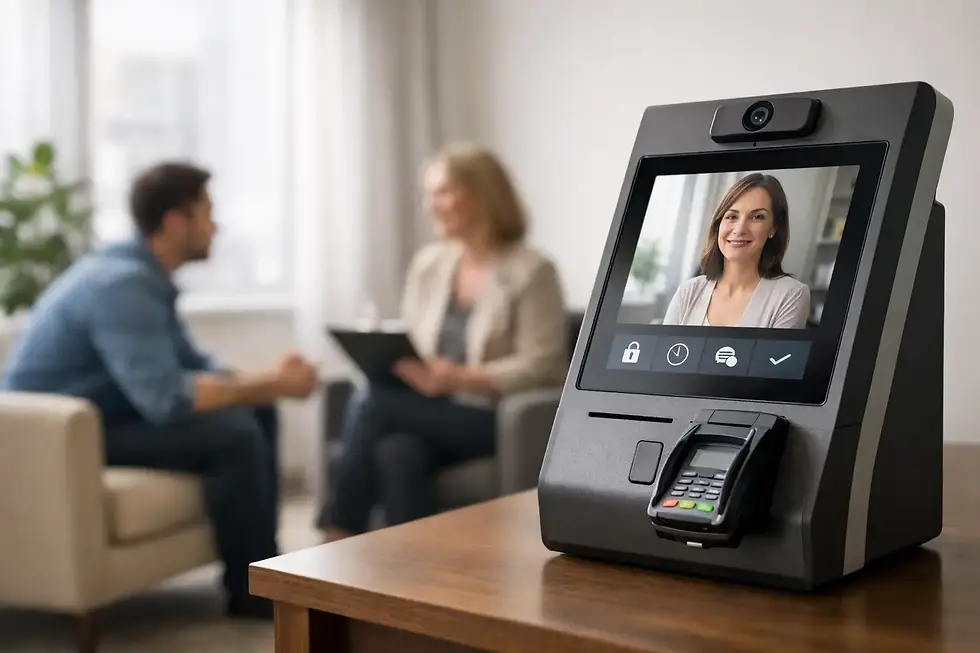
The basic experience should be simple: a guest enters their name on an iPad, you receive a text or email notification, and you continue your service until it is the right moment to welcome them. No searching for a staff member. No calling out from the lobby. No client wondering whether they are in the correct place.
That simplicity matters. Salon teams already manage calendars, service timing, product inventory, payments, rebooking, and client preferences. A check-in tool should not ask you to build a complex visitor workflow or teach clients a new process. It should do one job quietly and well: let you know someone is here.
For salons that serve a mix of regulars and first-time guests, the iPad screen can also make the space feel more intentional. Instead of an unattended entrance, clients see a clear, polite instruction. That small signal says, “We are expecting you.”
Presence is the point, not more administration
There is a difference between operational software and a tool designed around presence. A broad visitor management platform may include badges, approvals, reporting, and other features useful in large offices. In a small salon, those layers can feel unnecessary.
Most salon owners need an arrival signal, not another dashboard. They need the confidence to finish a blowout, complete a consultation, or give a client privacy during a sensitive conversation without watching the entrance. The best setup keeps that responsibility light.
Purple Couch App is built around this kind of moment. Guests check in on a lobby iPad, and the practitioner or owner receives a text or email. The experience is intentionally straightforward because the value is not in managing people. It is in protecting the tone of your space.
How the check-in flow works in a salon
A calm check-in process should take seconds for the client and almost no effort from the person providing the service.
First, place a dedicated iPad where guests naturally enter or wait. The screen should be easy to see, with a short message that tells clients what to do. In most cases, they simply enter their name and submit their check-in.
Next, the designated stylist, owner, or team member receives a notification by text or email. If you run a shared salon, you can decide who should receive arrival notifications based on how your team works. A suite owner may want every notification personally. A small studio may prefer a shared inbox or a single person handling arrivals between appointments.
Then, you continue with the client in front of you. You can greet the arriving guest when you have a natural pause, rather than reacting to a knock, a phone call, or the uncertainty of someone standing nearby.
This is especially helpful when appointments overlap slightly. A client who arrives early has a clear way to announce themselves. A guest who is right on time does not have to interrupt. And if you are running a few minutes behind, you know they are waiting without repeatedly checking the lobby.
Choosing a setup that feels right for your space
Not every salon needs the same check-in arrangement. A one-chair suite may only need an iPad near the entrance and notifications on the stylist's phone. A larger salon may have the iPad placed near retail shelves or a waiting area, where guests can check in without feeling exposed.
Placement matters more than people think. Avoid putting the device somewhere clients have to guess whether they are allowed to use it. Give it a visible, stable home. A small stand, a simple welcome message, and enough privacy to type a name comfortably are usually enough.
Consider the atmosphere you want to create, too. In a quiet, appointment-only studio, a check-in screen can prevent a new arrival from feeling like they have entered someone else's private moment. In a busier salon, it can reduce the pressure on staff members who are already assisting clients.
Connectivity is worth planning for before your first busy day. Most iPad check-in tools use Wi-Fi, and some iPads can use cellular service if your location's internet is unreliable. The right choice depends on your space, your signal strength, and whether the iPad will remain in one place. Test the notification path from the door to your phone so there are no surprises during an appointment.
The trade-off: automation should still feel personal
Some owners worry that self check-in will make a salon feel less warm. That can happen if the process replaces every human touch or if the screen language feels cold and transactional. But it does not have to.
A check-in app works best as a bridge, not a barrier. The client checks in independently, then receives your personal greeting as soon as you are available. You are not avoiding them. You are preventing their arrival from interrupting someone else's service.
Your wording matters. A brief message such as “Welcome. Please check in, and your stylist will be with you shortly” is clear and kind. It sets an expectation without overexplaining. If there is a common detail guests need to know, such as where to sit or how to enter a suite building, keep that instruction equally short.
There are cases where self check-in may not be the only answer. If your salon has frequent walk-ins, a large retail area, or a high volume of clients who need in-person assistance, you may still benefit from dedicated front-desk support. A self check-in app is most useful when appointments drive your schedule and the people providing services need uninterrupted time with clients.
A small change clients notice
Guests rarely describe a great salon visit by saying the notification system was efficient. They remember whether the experience felt organized, whether they knew what to do, and whether their stylist seemed attentive rather than distracted.
That is why arrival deserves care. It is the first transition into the appointment and often the first test of whether a new client feels comfortable in your space. A simple iPad check-in can remove uncertainty without making the experience feel formal or corporate.
When the door opens, your focus does not have to break. The guest can settle in, the client in your chair keeps your attention, and the next part of the day can begin with a little more calm.


Comments