

How to Manage Client Arrivals Without Interruptions
- karl50784
- Jul 28
- 6 min read
A client arrives three minutes early while you are in the middle of a meaningful conversation. They knock, hover in the hallway, or quietly open the door to ask whether they should come in. You have to choose between breaking attention with the client in front of you or leaving the arriving person unsure of what to do. Learning how to manage client arrivals is less about adding office procedures and more about protecting the care, privacy, and calm your clients expect.
For a solo practitioner or small team, arrivals can shape the tone of the entire appointment. A clear, respectful process gives people confidence from the moment they walk in. It also lets you stay fully present with the person you are already serving.
Why client arrivals deserve more attention
The arrival moment is small, but it carries emotional weight. A new therapy client may already feel vulnerable. A patient may be worried about an appointment. A salon or wellness client may not know whether they are in the right place, especially in a shared building with a quiet hallway and no receptionist.
Without a clear check-in process, clients often improvise. They may knock repeatedly, call from the parking lot, text a personal number, or wait outside your door wondering whether they have been forgotten. None of these actions are wrong. They are reasonable responses to uncertainty.
The cost lands on everyone. The client who arrives feels awkward. The client in session may feel that their time is less private or less protected. You are pulled out of the conversation, treatment, or service you are providing. Over time, these small interruptions can make a thoughtfully run practice feel more rushed than it is.
A receptionist can solve some of this, but many small practices do not need or want a full-time front desk. The better answer is often a simple arrival system that gives clients a clear next step and gives you a quiet notification.
How to manage client arrivals with a clear check-in routine
The strongest arrival process is easy enough that clients understand it immediately. It should require little explanation, work for first-time visitors, and fit the personality of your space.
Start with one obvious place to check in
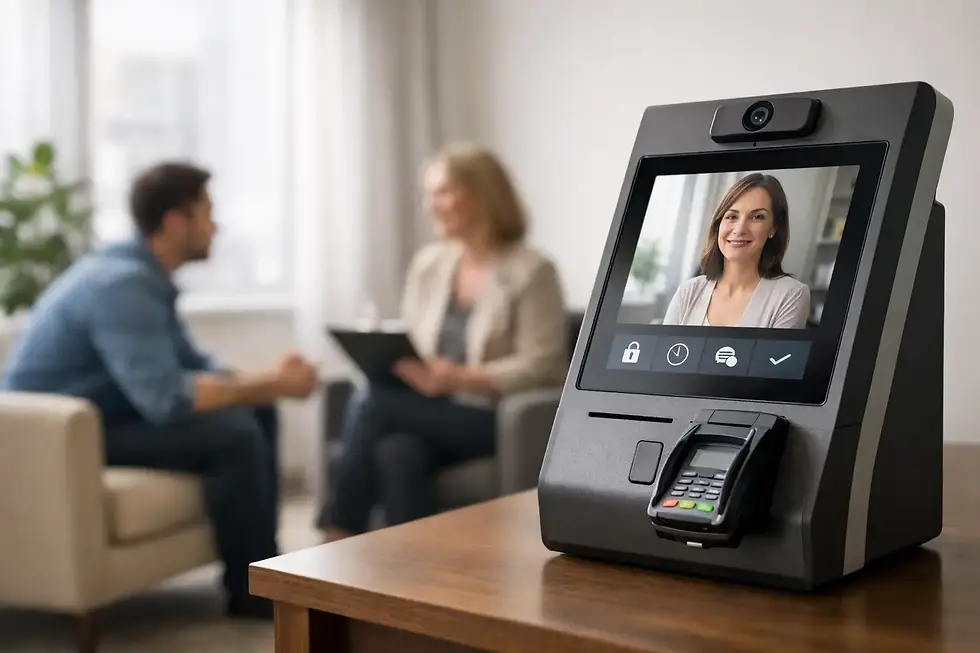
Give arriving clients a single, visible action. For many appointment-based offices, that means placing an iPad near the entrance, in the waiting area, or on a small stand outside the treatment room. A brief message such as “Welcome. Please check in, and we’ll be with you shortly” removes the guesswork.
Keep the area intentional. A clean surface, comfortable seating, and a simple sign communicate that waiting is expected and that the client has arrived in the right place. You do not need a busy reception desk to create reassurance.
Placement matters. If your office is inside a larger building, make sure the check-in point is easy to find after someone exits the elevator or enters the suite. If clients arrive directly at your studio, it may belong just inside the door. The goal is to make the next step clear before they feel tempted to interrupt.
Send a private arrival notification
Once a client checks in, you need to know they are there without continuously watching the clock, checking your phone, or listening for a knock. A discreet text or email notification allows you to finish the moment you are in, then greet the next client when you can do so with attention.
This is especially helpful in settings where confidentiality matters. Calling names into a waiting room, asking a client to announce why they are there, or relying on a shared staff text thread can feel more exposed than necessary. A private notification supports a more thoughtful boundary.
Purple Couch App is designed around this simple rhythm: a client checks in on an iPad, you receive a notification, and your focus stays with the person in front of you. The point is not to turn your office into a front desk. It is to make arrivals feel handled without creating another task to manage.
Tell clients what will happen next
A check-in tool works best when clients know what to expect after using it. Include a short note in appointment reminders, especially for new clients: arrive a few minutes early, check in on the iPad when you enter, and take a seat. Let them know you will come get them as soon as you are ready.
This language is warm without overpromising. Avoid telling people that you will be out immediately if appointments sometimes run close together. A better promise is clarity: they will know how to check in, and you will know they have arrived.
If a client needs accommodation, adjust the process. Someone who cannot comfortably use the iPad, has a language barrier, or needs assistance should have another easy way to let you know they are there. A calm arrival process should be inclusive, not rigid.
Design the waiting experience around dignity
Managing arrivals is not only a notification problem. It is also a waiting-room problem. Even a small corner can feel considered when it gives people privacy, comfort, and a sense of direction.
Think about what a client sees and hears in the first 30 seconds. Can they tell where to sit? Is there a place for a coat or bag? Can conversations from your treatment room be overheard? Is the check-in screen limited to what is necessary, rather than displaying information that could make someone feel exposed?
For therapists, counselors, medical providers, and wellness clinicians, discretion is central. A client should not have to say their name loudly through a door or explain their reason for visiting to someone nearby. For salons and studios, the same principle still applies: clients want to feel expected, not like they have wandered into someone else’s appointment.
The right level of formality depends on your practice. A physician’s office may need a more structured intake flow. A private studio may only need a name and an arrival alert. Resist adding questions simply because the screen can ask them. Every extra step can slow the arrival and make the experience feel transactional.
Prepare for early, late, and unexpected arrivals
A good process also accounts for the exceptions that happen every week. Early arrivals are common, and they are not necessarily a problem. Give them a comfortable place to wait and a consistent check-in option. If you do not have a waiting area, say so clearly in advance and let clients know when to enter or where to wait.
Late arrivals require a different approach. Your check-in notification can let you know they are present, but your scheduling policy should determine what happens next. Some practices can still offer the remaining appointment time. Others need to reschedule. The arrival system should support your boundaries, not pressure you to abandon them.
Unexpected visitors deserve a plan too. Delivery drivers, family members, salespeople, and clients who arrive on the wrong day should not be able to disrupt a session by default. A simple sign can direct non-client visitors to contact you another way. If your building requires a locked door, provide clear instructions for confirmed clients rather than relying on an open-door policy.
Keep the process simple enough to trust
The temptation is to solve every front-office need at once: intake forms, payments, scheduling, visitor logs, marketing prompts, and detailed analytics. Those tools can be useful in the right setting, but they can also create friction where you only needed a calm arrival signal.
For most small appointment-based practices, the essential questions are straightforward: Did the client arrive? Can they wait comfortably? Can you continue the current appointment without an interruption? If the answer is yes, your system is doing its job.
Choose technology that your clients can use without instruction and that you can set up without becoming an office systems manager. An iPad-based check-in process is often enough because it is familiar, visible, and dedicated to one purpose. Confirm that the system supports the privacy standards relevant to your field, has a reliable internet option, and can notify you in the way you actually notice.
A quiet arrival process tells clients something valuable before you say a word: their time has a place here, and so does the attention of the person already in the room. That is a small detail with a lasting effect on the tone of your space.


Comments