

Medical Office Check-In Without the Interruption
- karl50784
- Aug 19
- 5 min read
A medical office check-in can shape the patient experience before a clinician says a word. When a patient arrives and finds an empty lobby, a closed door, or no clear next step, the uncertainty is immediate. Should they knock? Wait quietly? Call the office? For a practitioner who is already with someone, that arrival can create an equally uncomfortable choice: interrupt the current visit or leave the next patient wondering whether they have been noticed.
For small medical and wellness offices, this is not a minor administrative detail. It affects privacy, punctuality, professional boundaries, and the tone of care. A thoughtful check-in process gives patients a clear welcome while allowing clinicians to keep their attention where it belongs.
Why medical office check-in is more than a front-desk task
In a large practice, a receptionist may absorb the natural rhythm of arrivals, questions, late patients, and paperwork. But many physicians, therapists, acupuncturists, nurse practitioners, and wellness clinicians work in a quieter model. They may be the only person on site, share office space, or rely on a small team that is busy serving patients rather than sitting at a front desk.
In those settings, arrivals have a way of breaking through the day. A patient may knock during a sensitive conversation. A provider may hear the entry door and lose focus trying to determine who has arrived. Or the patient may wait in a hallway, unsure whether they are early, forgotten, or in the wrong place.
None of those moments feel especially welcoming. They can also create a difficult privacy issue. Calling a patient’s name across a waiting area, asking why they are there within earshot of others, or leaving a sign-in sheet exposed can reveal more than a patient intends to share.
The right process is not about making a small practice feel like a corporate facility. It is about creating a clear, calm handoff between arrival and care.
What a calmer check-in experience looks like
A good check-in process is almost invisible. The patient walks in, sees a simple instruction, checks in, and knows their arrival has been communicated. The clinician receives a discreet notification and continues the current appointment without stepping out or checking the hall every few minutes.
That rhythm matters. Patients do not need a complicated digital intake experience at the door if they have already completed forms. They need reassurance: you are in the right place, we know you are here, and someone will be with you when it is time.
For the clinician, the benefit is equally human. There is no need to choose between being polite to the arriving patient and being fully present with the person currently in the room. The interruption disappears without making anyone feel ignored.
A simple three-step flow
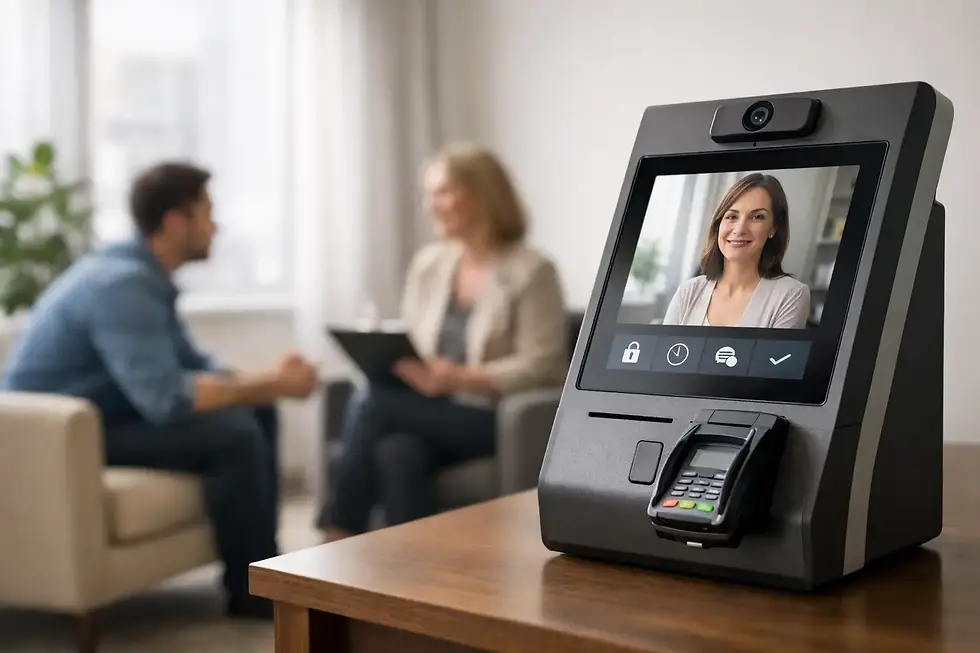
For many small offices, the clearest approach is straightforward: the patient checks in on an iPad in the lobby, the clinician receives a text or email notification, and the visit already in progress continues without disruption.
This works particularly well when the check-in screen asks only for the information needed to identify the arriving patient. A patient should not have to navigate a long menu, download an app, or wonder which button applies to them. The fewer decisions required at the door, the more natural the experience feels.
Purple Couch App is built around this kind of arrival notification for appointment-driven spaces. Rather than adding a broad visitor-management system to a small office, it gives patients one clear action and gives the practitioner a quiet signal that they have arrived.
Protecting privacy without making patients feel processed
Medical office check-in carries privacy responsibilities that go beyond convenience. Even a small office should consider what is visible to other people in the space, what information appears on a shared screen, and where notifications are sent.
A paper sign-in sheet may seem familiar, but it can expose names and appointment times. A verbal check-in can be awkward in a shared suite or busy waiting room. And a patient who must announce their arrival through a closed door may worry that they are interrupting care.
An iPad-based check-in can offer a more discreet alternative when it is designed with privacy in mind. The screen should be placed so it is not easily read by passersby. It should collect only what is necessary for the arrival notification. Notifications should go only to the appropriate clinician or staff member, not to a shared device that others can access.
Technology is only one part of privacy. The language around it matters, too. A short message such as “Please check in here. Your provider will be notified” is warmer and clearer than a wall of instructions. It respects the patient’s time without drawing attention to why they are visiting.
Choosing the right process for your office
There is no single medical office check-in workflow that fits every practice. A solo behavioral health provider has different needs from a primary care office with multiple clinicians, walk-in patients, insurance verification, and clinical screening requirements.
A simple arrival notification system is often a strong fit when appointments are scheduled in advance, the office does not have a full-time receptionist, and patients generally complete forms before arriving. It is especially helpful when maintaining a quiet environment is part of the care experience.
A more complex workflow may be necessary when staff need to verify insurance at every visit, collect copays in person, manage frequent walk-ins, screen for urgent symptoms, or direct patients to multiple departments. In those cases, an arrival notification can still support the process, but it should not replace the clinical or administrative steps the practice truly needs.
The goal is not to digitize every interaction. It is to remove the one that creates the most unnecessary friction: making patients guess how to announce themselves and making clinicians monitor the door.
Small details that make check-in feel intentional
The most effective check-in setup is easy to understand from a few feet away. Place the iPad where patients naturally pause after entering, ideally near a sign that confirms they have reached the right office. Keep the display charged, clean, and positioned at a comfortable height.
Give patients a backup option for the rare moments when technology is unavailable. A discreet phone number or a short instruction for assistance can prevent confusion without turning the wall into a list of rules. If your office shares a building or suite, make sure the directions distinguish your practice from neighboring businesses.
It also helps to decide what happens after the notification arrives. Some practitioners prefer to greet the next patient when the current session ends. Others may send a brief acknowledgment when there is an unexpected delay. The check-in tool does not need to dictate that relationship. It simply gives you the information to respond thoughtfully.
If you work with a small team, agree on who receives notifications and how coverage works when someone is out. A patient should not have to check in twice because the usual recipient is unavailable. A few minutes spent establishing that routine can prevent awkward waiting moments later.
The value of uninterrupted attention
Patients notice when a provider is divided between the room and the hallway. Even when the interruption lasts only a few seconds, it can change the feeling of a conversation, especially in care settings where trust, vulnerability, or emotional focus are central.
The same is true for the arriving patient. They may already be anxious about an appointment, managing pain, taking time away from work, or visiting a new office for the first time. Being able to check in quietly and receive a clear signal that they are expected can lower the temperature of that moment.
This is why front-desk support is not always about staffing a desk. Sometimes it is about giving the space a dependable rhythm. Patients arrive, their presence is known, and care continues with dignity on both sides of the door.
A calm office does not happen by accident. It comes from small choices that tell patients, without making a speech, that their time and privacy have been considered.


Comments