

iPad Check-In Software for Calm Client Arrivals
- karl50784
- 5 days ago
- 6 min read
A client arrives three minutes early while you are in the middle of a session. They hesitate at the door, unsure whether to knock. You hear movement in the hallway, feel your attention pull away, and face a choice no practitioner should have to make: interrupt the person in front of you or leave the arriving client uncertain. iPad check-in software solves that small but meaningful moment.
For appointment-based offices without a full-time receptionist, arrival management is not really about managing a lobby. It is about protecting presence. Therapists, stylists, acupuncturists, physicians, and studio owners need a way for clients to be acknowledged without turning every arrival into a verbal interruption.
The problem is the interruption, not the check-in
Many small practices begin with an informal system. Clients knock. They send a text. They wait in the hall and hope someone notices. The practitioner listens for the door, checks a phone between appointments, or briefly steps away from a client to see who has arrived.
None of these approaches is disastrous on its own. But repeated throughout the week, they can change the tone of a space. The client currently being served may feel that the session is being rushed or divided. The arriving client may wonder whether they are in the right place, whether they should announce themselves, or whether they have been forgotten.
A front-desk employee can address this, but that is not a practical expense or need for every office. Solo practices and small teams often need something simpler: a quiet way to say, “I’m here,” without asking anyone to stop what they are doing.
How iPad check-in software supports focused care
The best iPad check-in software does not try to turn a calm practice into a corporate reception desk. It gives clients one clear action when they arrive, then lets the practitioner decide when to respond.
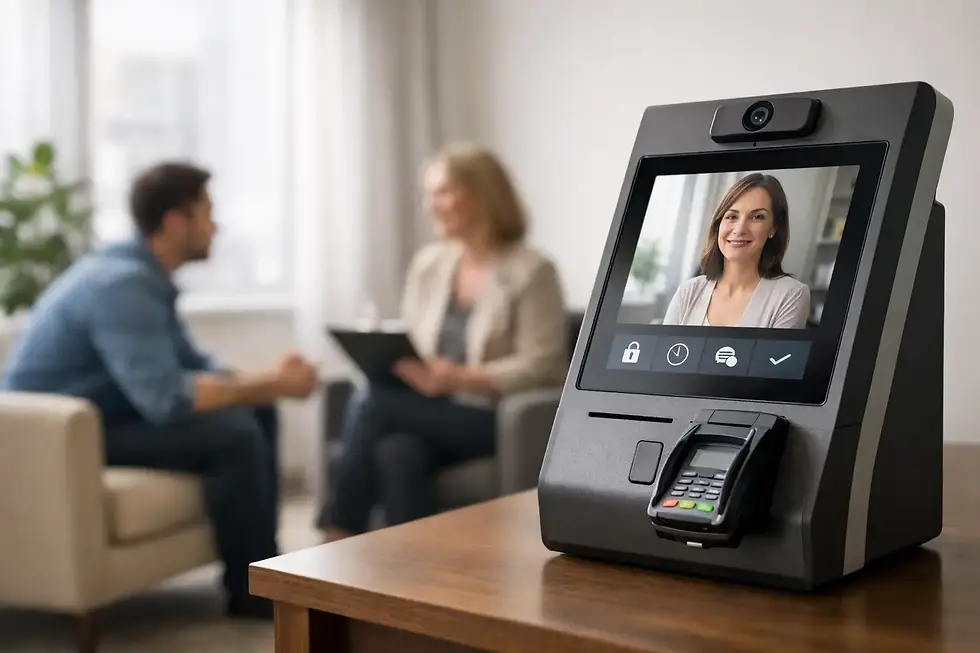
The workflow should feel almost invisible. A client enters their name on the iPad. The appropriate practitioner receives a text or email notification. The client takes a seat, knowing their arrival has been acknowledged. The practitioner continues the current session without breaking concentration.
That distinction matters. A notification is different from an interruption. It lets you remain with the person in front of you while still knowing that the next person is safely checked in.
For a therapist, that can mean staying present during a vulnerable conversation rather than reacting to a knock. For a salon professional, it can mean finishing a color consultation without making a guest wait at the chair. For a wellness provider, it can mean preserving the quiet clients expect before treatment begins.
What a client should experience at the door
Good check-in technology should feel reassuring, not like another form to complete. The client should not need an account, a password, or instructions from a staff member. They should see a clear screen, identify themselves, and receive an immediate sense that someone knows they have arrived.
This is especially helpful for new clients. They may already feel uncertain about finding the office, navigating a shared building, or entering a space for the first time. A simple lobby iPad gives them a clear next step without requiring them to knock on a closed door or announce themselves in a hallway.
There is also a privacy benefit. In many practices, saying a full name aloud at a desk or through a doorway is unnecessary. A discreet screen-based check-in can reduce that awkwardness and help the waiting area feel more respectful.
The goal is not to make the arrival feel automated. It is to make it feel considered. Clients should understand that you are expecting them, even when you are giving your full attention to someone else.
What practitioners need from the system
A small office usually does not need visitor badges, security workflows, complex analytics, or a long implementation project. Those features may make sense for large organizations with multiple entrances and dedicated administrative teams. They can also create more work than they remove for an independent practice.
Instead, look for a system that is intentionally limited to the arrival moment. It should be easy to set up, easy for clients to use, and easy to trust during a busy day.
Notifications that reach you where you are
The alert method matters. If your phone is the device you can reliably see between appointments, a text notification may be the most useful option. If your office workflow is centered on email, that may be enough. The right system should support the way you already work rather than requiring you to monitor another dashboard.
It is also worth thinking about connectivity before you choose a setup. Wi-Fi works well for many offices, but an iPad with cellular service can be a helpful backup where internet access is inconsistent. The check-in experience should not become fragile because the lobby connection drops.
A setup that does not become a project
If a check-in tool requires days of configuration, staff training, and technical support, it is likely built for a different kind of business. Small practices need to be able to place an iPad in the waiting area, personalize the welcome, choose notification recipients, and begin using it quickly.
That simplicity has a practical benefit: you are more likely to keep using it. Systems only improve the client experience when they remain easy enough to trust during your busiest weeks.
Privacy that fits the work you do
For medical and wellness practices, privacy is not an optional detail. If you handle protected health information, ask whether the platform is HIPAA compliant and how it treats the information involved in check-in. Even in settings outside healthcare, discretion matters. Clients should not have to reveal more than is necessary simply to let you know they have arrived.
A calm arrival process is partly about emotional comfort and partly about thoughtful boundaries. The two are closely connected.
Choosing the right iPad check-in software for your space
Start with the problem you actually want to solve. If visitors need badges, legal waivers, building access, package tracking, or detailed security logs, a broad visitor-management platform may be appropriate. Expect more features, more configuration, and often a more formal experience at the front desk.
But if your main need is simple arrival notification, broader software can be more than you need. It may ask clients to navigate steps that feel out of place in a therapy office, treatment room, salon suite, or small studio.
For most appointment-driven spaces, evaluate a few basics:
Can a client check in without assistance or a login?
Will you receive a text or email right away?
Can you set it up on an iPad in minutes rather than days?
Does it support the privacy expectations of your practice?
Is the monthly cost reasonable without a long contract?
A product such as Purple Couch App is designed around this narrower need: clients check in on an iPad, the practitioner is notified, and the room stays calm. It is a better fit when protecting attention matters more than building a full reception operation.
Small details that make the workflow feel natural
Placement matters. Position the iPad where a client can see it immediately upon entering, without needing to walk through a private area or search for directions. A simple stand at comfortable height is usually better than placing it flat on a counter where it can be missed.
Your welcome message should be warm and brief. “Welcome. Please check in when you arrive” is enough. You do not need a long explanation. If clients regularly arrive at a shared building entrance, consider including a small sign nearby that confirms they are in the right place and directs them to the iPad.
Think about what happens after check-in, too. Is there clear seating? Is the waiting area comfortable and private enough? Can a client tell whether they should wait quietly or let someone know about an urgent scheduling issue? Software helps, but the full arrival experience comes from the environment around it.
For teams, establish a simple expectation about notifications. If one practitioner is delayed, who sees the alert? If a client arrives unusually early, is there a preferred response? These decisions do not need a formal operations manual. A brief shared agreement prevents uncertainty later.
Common questions from small practices
Most clients are comfortable using an iPad for a simple task, particularly when the screen has one obvious purpose. The experience should be easier than sending a text, finding a contact, or guessing whether to knock.
Do I need a receptionist to manage it?
No. That is the point. The iPad handles the arrival signal, while you stay focused on the work already in progress. You can review a notification when there is a natural pause.
What if my office Wi-Fi is unreliable?
A cellular-enabled iPad can offer another connection option. Whether that is worthwhile depends on your location and how dependable your existing network is, but it can provide helpful peace of mind for offices with spotty service.
Is this only for therapy practices?
No. Any appointment-based space where a professional is often unavailable to greet arrivals can benefit. The common need is not the type of service. It is the need to acknowledge clients without splitting your attention.
A thoughtful check-in process does more than tell you who is waiting. It gives every client a clearer, calmer start to their time with you. When the door opens, you do not have to choose between the person arriving and the person already in your care. The space can simply hold both.


Comments