

How to Automate Client Arrival Texts Calmly
- karl50784
- Aug 13
- 6 min read
A client arrives three minutes early while you are in the middle of a session. They hesitate at the door, unsure whether to knock or wait. You notice movement in the hallway, lose your train of thought, and briefly split your attention between the person in front of you and the person who just arrived. When you automate client arrival texts, that small but recurring interruption no longer has to set the tone for either appointment.
For a therapy practice, salon, wellness clinic, studio, or small medical office, client arrival is not just an administrative event. It is a human moment. The arriving client wants reassurance that they are in the right place and have been noticed. The client you are serving deserves your full attention. A simple check-in and notification process can protect both.
Why arrival interruptions carry more weight than they seem
Most appointment-based businesses without a full-time receptionist have developed a workaround. A client knocks. Someone calls from the hallway. The practitioner glances at a phone between sentences. Or the arriving client waits quietly, wondering whether they should announce themselves.
None of these situations is dramatic on its own. But repeated throughout the week, they create awkward waiting moments and a subtle sense of hurry. They can also make a private office feel less private. In therapy and health settings especially, an unexpected knock or an open-door exchange can disrupt a conversation that needs care and concentration.
The goal is not to make your practice feel automated. It is to make the arrival experience feel considered. Clients should know what to do when they enter. You should know they are there without leaving the session, checking the hallway, or asking the person in front of you to pause.
How to automate client arrival texts without losing the personal touch
The best arrival text workflow is almost invisible. It should not ask clients to download an app, create an account, navigate a complicated visitor form, or explain why they are checking in. It should simply give them a clear next step.
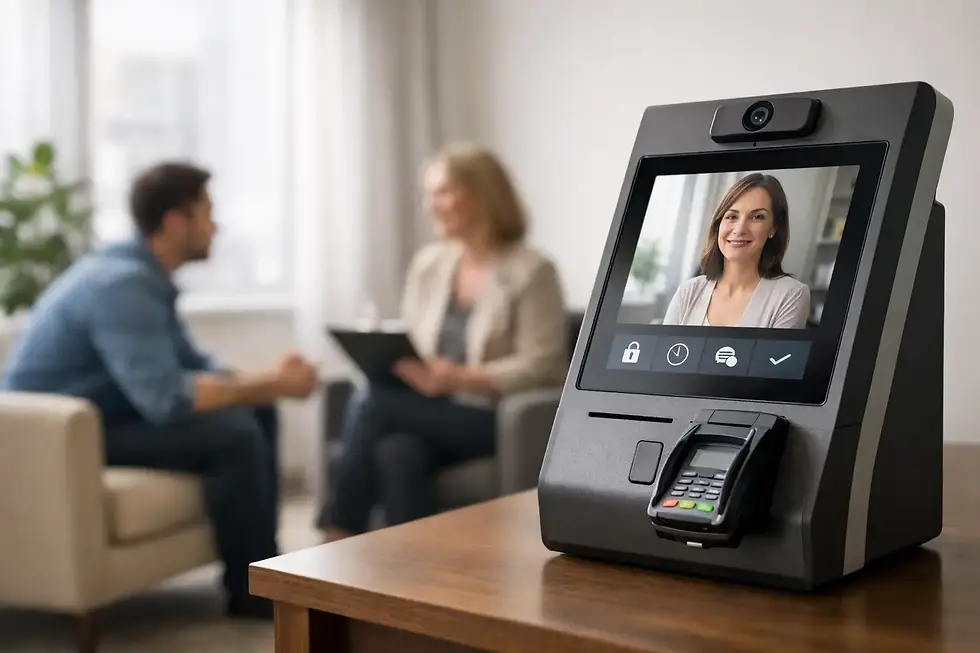
A practical process has three parts: the client checks in on a shared iPad, you receive a text or email alert, and you continue with the appointment already underway. The notification tells you what you need to know: your next client has arrived. Nothing more needs to happen until you are ready to welcome them.
This approach works because it removes uncertainty on both sides. The client does not have to decide whether knocking is appropriate. You do not have to monitor the waiting area. And the person you are currently serving does not have to experience your attention being pulled away.
Start with one clear instruction
Place an iPad where clients naturally pause when they enter. A short instruction is enough: “Please check in when you arrive.” If your space has a shared lobby, add your practice name or suite number so clients feel confident they are using the right check-in screen.
Keep the language warm and simple. “Let us know you’re here” often feels more welcoming than “Register visitor.” The difference may seem small, but words shape the tone of your space. Clients are arriving for care, a service, or focused time with you. They should not feel as though they have entered a corporate lobby.
Send the notification to the person who needs it
A text message is useful when you are moving between rooms, working in a larger suite, or do not want to check email during the day. An email notification can work well for an office manager or a team that handles arrivals from a shared inbox.
For solo practitioners, the most helpful setting is usually a direct text to the phone already nearby. The alert should be brief and distinct enough to notice, but not so detailed that it demands an immediate response. An arrival notice is information, not a new task.
If several people share the office, decide in advance who receives which notifications. You might route each provider’s arrivals to that provider, or send alerts to a designated front-of-house team member during certain hours. The right choice depends on your layout and how your team works, but clarity matters more than complexity.
Keep notifications private and purposeful
Arrival notifications should be designed with privacy in mind. In many practices, the safest and most respectful message is simply that a client has checked in, without including sensitive appointment details or unnecessary personal information.
For HIPAA-covered practices, use a HIPAA-compliant check-in platform and review your notification settings with your own privacy policies in mind. A text alert can support a thoughtful client experience, but it should not become a channel for sharing clinical information. Keep the message limited to the purpose of the alert: someone has arrived and is waiting.
What changes for clients when check-in is clear
Clients rarely describe a good arrival process as a feature they loved. They simply feel settled. They know they were acknowledged, they have permission to wait, and they do not have to interrupt someone to get help.
That sense of ease matters for someone arriving for a first therapy session, an acupuncture appointment, a medical consultation, or a salon service. They may already be nervous, running late, or unfamiliar with the building. A clear iPad check-in gives them a small moment of certainty.
It also gives you a better opening when you are ready. Instead of being caught off guard by a knock, you can finish your current session with care, reset the room if needed, and greet the next client intentionally. That is a more professional experience than rushing out mid-conversation because you saw someone waiting through the door.
Choosing the right tool for automated arrival texts
Not every scheduling platform solves the actual arrival problem. Appointment reminders are helpful before a visit, but they do not tell you when a client is physically in your lobby. Broad visitor-management systems may offer many features, yet can feel overly complicated for a small practice that only needs an easy, respectful way to know who has arrived.
Look for a tool that is built around the real moment of arrival. It should be easy for clients of different comfort levels with technology, simple enough to set up without an IT project, and appropriate for the privacy expectations of your field.
A few practical details make a meaningful difference:
An iPad-only check-in experience keeps the client side familiar and contained.
Text and email options let you choose how you want to be notified.
Cellular support can be useful in offices with unreliable Wi-Fi.
Simple setup means you can improve the client experience without adding another complicated system to manage.
Purple Couch App is designed for this exact kind of office: a shared iPad lets clients check in, then sends a text or email notification so the practitioner can stay present. It is intentionally focused on arrival rather than trying to become your scheduler, phone system, or front desk replacement.
When automated arrival texts may need a backup plan
Automation helps most when it supports good judgment. There are situations where you will still want a human fallback. A new client may need accessibility support. A client who does not speak English comfortably may benefit from a visual instruction or staff assistance. A building with a confusing entrance may need better signage before the client ever reaches the iPad.
Think about what happens if the iPad loses power, the internet goes down, or a client arrives without reading the screen. A small, discreet backup sign can help: “If you need assistance, please call or text this number.” You may never need it often, but having a clear alternative prevents one exception from turning into confusion.
It also helps to set expectations in appointment confirmations. A single sentence can do the job: “When you arrive, please check in on the iPad in the waiting area.” Clients who know the routine ahead of time are less likely to knock or wonder whether they should announce themselves.
A quieter way to run a full day
Automating arrivals is not about putting more distance between you and your clients. It is about removing the small points of friction that get in the way of attentive service. Your client in the room gets continuity. Your client in the lobby gets acknowledgment. You get to move through the day without constantly listening for the door.
The right check-in process should feel calm enough that no one has to think much about it. It simply gives every arrival a clear place to land, while protecting the presence your work requires.


Comments