
Digital Receptionist for a Calmer Practice
- karl50784
- 4 days ago
- 6 min read
A client arrives five minutes early while you are in the middle of a session. They hesitate in the doorway, unsure whether to knock, sit down, or announce themselves. You notice them. The person in front of you notices too. For a moment, your attention is split.
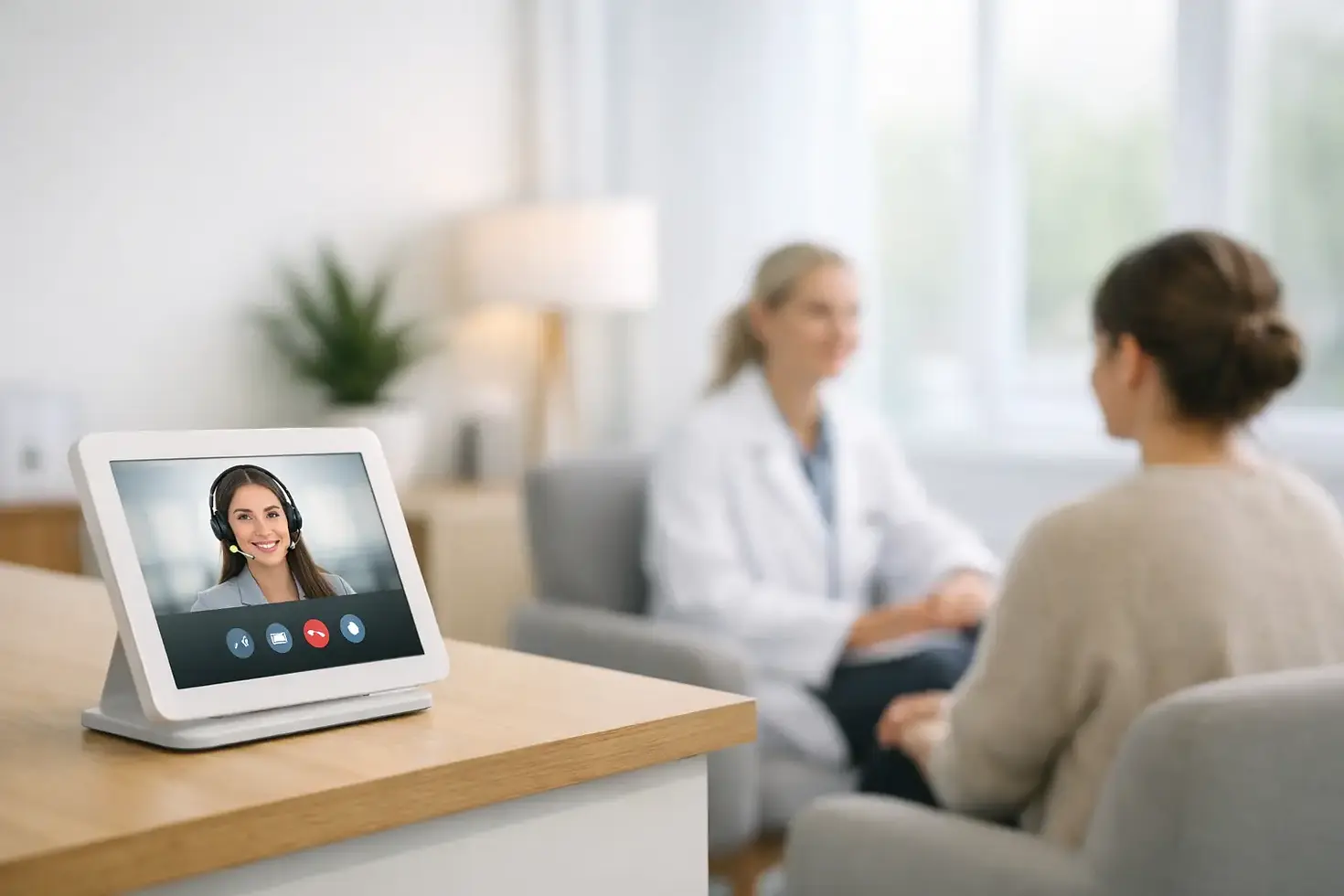
A digital receptionist gives that moment a quieter path. Instead of waiting awkwardly or interrupting care, clients check in on an iPad. You receive a text or email that they have arrived, then continue giving your full attention to the person already in your room.
For small, appointment-based practices, that simple change can protect far more than a schedule. It protects privacy, professional boundaries, and the tone of your space.
What a digital receptionist actually does
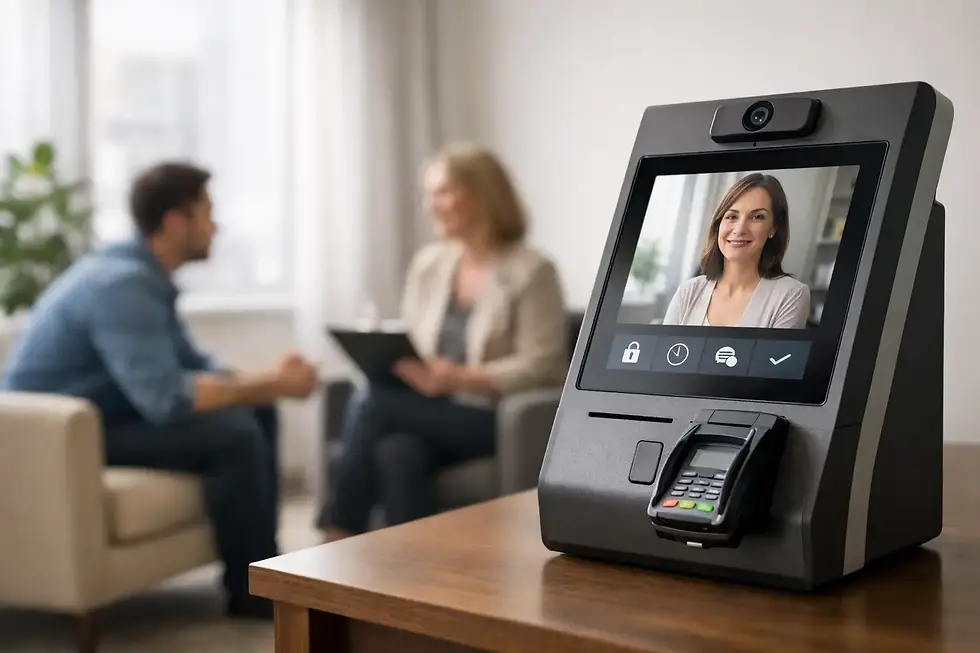
A digital receptionist is a self-service check-in tool that welcomes arriving clients and lets the appropriate practitioner know they are there. In a small office, it often takes the place of a traditional front desk without trying to recreate every task a full-time receptionist performs.
That distinction matters. A solo therapist, acupuncturist, stylist, or studio owner may not need a complicated visitor-management system with badges, security logs, and layers of administrative workflows. They need a reliable way for the next client to say, “I’m here,” without opening a door, raising their voice, or creating a disruption.
The most useful setup is intentionally simple:
1. A client arrives and checks in on a lobby iPad.
2. Their practitioner receives an arrival notification by text or email.
3. The practitioner finishes the current appointment, then welcomes the next client when ready.
There is no need to watch the waiting room, listen for footsteps in the hall, or ask clients to text from their personal phones. Everyone understands what happens next.
Why arrivals can change the feel of a practice
Arrival interruptions are easy to dismiss as a small inconvenience. But in client-centered work, they can carry more weight than that.
For therapists and counselors, a knock at the door can pull someone out of a difficult conversation. For medical and wellness providers, it can interrupt an examination or a private discussion. For salon and studio professionals, it can mean stepping away with color on your hands, music playing, and a client already in the chair.
The issue is not simply lost time. It is the subtle message the interruption sends: that attention is divided, that privacy can be compromised, or that clients are expected to figure things out on their own.
Clients waiting outside a closed door can feel uncertain, especially if it is their first visit. Should they knock? Are they in the right place? Has anyone noticed them? In a shared office building, they may worry about standing in a hallway where other people can hear or see them.
A clear, quiet check-in process replaces that uncertainty with a small but meaningful reassurance. The client has arrived. You have been notified. Nothing needs to be forced.
A digital receptionist is not meant to feel corporate
Some business software can make a personal practice feel like a busy office tower. Complex forms, screens full of fields, and generic kiosk language may solve an operational problem while creating a colder experience for clients.
For most small practices, the better question is not, “How many front-desk tasks can this system automate?” It is, “Will this help clients feel expected while helping me stay present?”
A thoughtfully designed digital receptionist should be easy for nearly anyone to use. A client should not need to download an app, remember a password, or navigate a lengthy menu just to let you know they have arrived. The screen should be clear, welcoming, and quick enough that it does not become another awkward moment.
It should also fit the character of your office. An iPad placed neatly in a reception area, entryway, or waiting room can feel more like a quiet sign of care than a piece of corporate equipment. The technology stays in the background. The human experience stays in focus.
When a self-service check-in system makes sense
A digital receptionist is especially helpful when you work alone or with a small team and appointments overlap with client arrivals. It can be a practical fit for therapy practices, counseling offices, acupuncture clinics, wellness providers, physicians’ offices, salons, private fitness studios, and other spaces where the person delivering the service is also managing the practice.
It is also useful when your office has a locked entrance, a shared lobby, or rooms that are not within view of the waiting area. In these settings, relying on a knock or a hallway conversation can create both privacy concerns and missed arrivals.
Still, it is not the right answer for every business. A high-volume medical office with a large team may need appointment scheduling, insurance intake, payment collection, queue management, and live front-desk support. A digital check-in tool can complement those processes, but it may not replace them.
The best fit is a practice where the main problem is presence: clients need to be acknowledged, and practitioners need to know who has arrived, without breaking the work already happening in the room.
Choosing a digital receptionist for a small office
Start with the arrival experience, not a feature checklist. Picture a first-time client entering your office. Can they immediately tell what to do? Can they check in without giving personal information out loud? Will you know they are there without needing to monitor the space?
Then look at the practical details. Setup should take minutes, not a project plan. The system should work on a dedicated iPad and give you a choice of text or email notifications. If Wi-Fi in your building is inconsistent, cellular iPad support can make a real difference.
Privacy also deserves more than a passing mention. If your work involves protected health information, choose a HIPAA-compliant option and keep the check-in interaction minimal. An arrival notification does not need to become a detailed public record of a client’s reason for visiting. The goal is to communicate presence discreetly.
Finally, consider the ongoing commitment. Small practices often need flexibility, especially when schedules, locations, or staffing change. Straightforward monthly pricing, a trial period, and no long-term contract can be more useful than a system with an impressive feature list you will never use.
Purple Couch App was built around this narrower, more human need: a client checks in on an iPad, you get notified, and your focus never has to break.
Small choices that make check-in feel more welcoming
The tool matters, but the surrounding details matter too. Place the iPad where clients will see it naturally when they enter, without having to search for it or walk past private treatment rooms. Keep the area clear and the screen charged.
A short sign can help first-time visitors: “Welcome. Please check in here when you arrive.” That is enough. You do not need instructions that make the process feel complicated.
It also helps to tell new clients what to expect before their first appointment. A single sentence in an appointment reminder can reduce uncertainty: when they arrive, they can check in on the iPad and you will come get them shortly. This is particularly considerate for clients who may already feel nervous about a first therapy, medical, or wellness visit.
Set expectations for timing, too. A check-in notification lets you know someone is waiting; it does not mean you need to end a session abruptly. When clients understand that you will greet them as soon as you are available, the process supports boundaries rather than adding pressure.
The real value is uninterrupted attention
Saving the cost of a full-time receptionist is a meaningful benefit for a small practice. So is avoiding the daily effort of manually checking who has arrived. But the deeper value is harder to put on a spreadsheet.
When clients can arrive quietly and know they have been seen, they do not need to interrupt. When you can trust that notification will reach you, you do not need to divide your attention between the room you are in and the lobby outside it. The day feels less reactive.
That sense of calm becomes part of the service itself. It tells clients that their privacy is considered before they ever sit down, and it gives you room to do the work only you can do. A thoughtful check-in process is a small way to say: you are expected, and when it is your time, you will have my full attention.


Comments