

How to Notify Therapist of Arrivals Calmly
- karl50784
- Aug 18
- 6 min read
A client opens the door halfway through a session. You hear the handle, notice movement in the hallway, and feel your attention pull away from the person sitting across from you. Even if you stay in the room, the moment changes. A simple way to notify therapist of arrivals protects that moment for everyone involved.
For small therapy practices without a full-time receptionist, arrivals can create a quiet but persistent problem. Clients may not know where to wait. Therapists may feel pressure to check the lobby between sessions. And the person currently receiving care can sense when their clinician is divided between the room and the next appointment.
The goal is not to make your office feel automated. It is to create a clear, respectful arrival routine that lets clients know what to do and lets you know they are there, without requiring anyone to interrupt a session.
Why arrivals deserve more attention
An uncertain arrival is rarely just an operational inconvenience. For a new client, especially one coming to therapy for the first time, an empty lobby or closed office door can feel awkward. They may wonder whether they are in the right place, whether they should knock, or whether they have been forgotten.
For the therapist, the interruption can be equally uncomfortable. Opening the door mid-session to greet someone waiting outside may feel polite, but it interrupts the conversation already in progress. Ignoring a client who has arrived can feel impersonal. Checking a phone repeatedly creates its own distraction.
This is why the tone of your space matters. A calm arrival process gives the waiting client a next step and gives the current client your full presence. It also helps you maintain professional boundaries without seeming distant or inaccessible.
The simplest way to notify therapist of arrivals
The most effective process is usually the least complicated: the client checks in, you receive a discreet notification, and you continue the session until it is time to welcome them in.
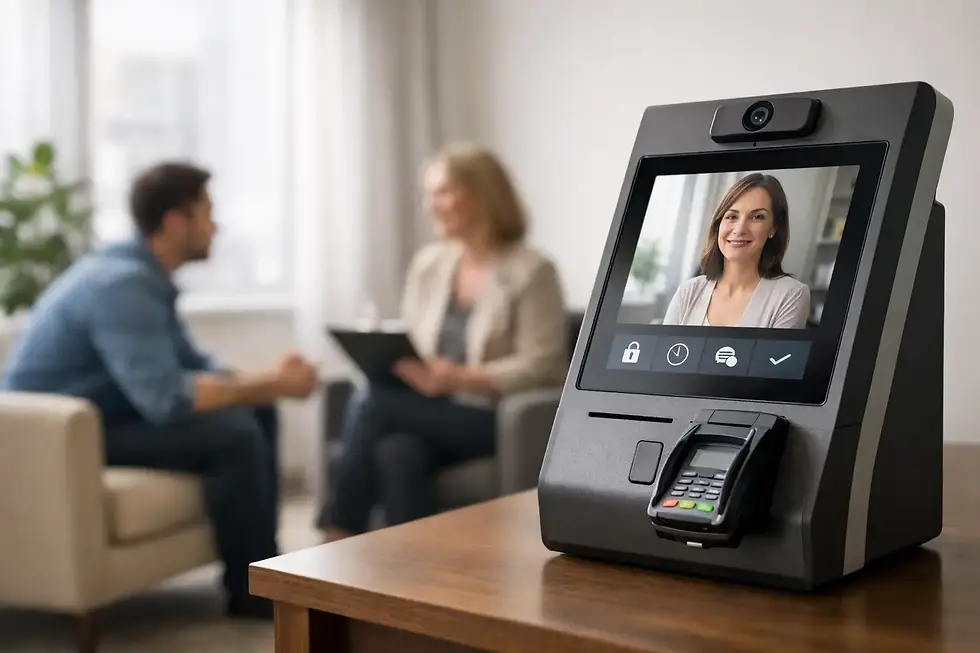
A dedicated iPad in the lobby or near the entrance can provide a clear check-in point. A short message on the screen tells clients exactly what to do when they arrive. After they check in, the therapist receives a text or email alert. There is no need for a knock at the door, an uncertain wait in the hallway, or a staff member relaying the message.
The notification itself should be quiet and useful. Depending on your practice and privacy preferences, it might simply say that a client has arrived or indicate the scheduled appointment time. The purpose is presence, not a stream of administrative detail.
This small change can make a noticeable difference. You no longer need to monitor the lobby. Your client does not need to announce themselves. The person in session is not left wondering why your attention shifted. Everything has a place.
Keep the client’s next step obvious
The sign-in experience should not require explanation. Clients should be able to walk in, see the iPad, enter the requested information, and sit down. If you use a paper sign-in sheet, a clipboard, or a doorbell, consider where those methods create friction.
Paper sheets can expose names or appointment times to other visitors. Doorbells and knocks require an immediate response. A verbal greeting may be appropriate in some settings, but it is difficult to rely on when you are alone with another client.
A simple on-screen prompt is often enough: “Welcome. Please check in, then have a seat. Your therapist will be with you shortly.” It reassures clients without asking them to make a decision about whether they should interrupt.
Choose an alert that supports focus
Text and email alerts both work, but the right option depends on how you work. A text may be easier to notice between appointments or when you are away from your desk. An email may fit better if you prefer to keep work communication in one place.
What matters most is that the alert is discreet. Avoid a loud sound that could pull focus from a session or alert others in the office that someone has arrived. If you use a phone, keep it on silent and place it out of the client’s line of sight. The notification should help you stay informed, not become another source of interruption.
It is also wise to keep arrival messages minimal. A neutral alert can reduce unnecessary exposure of client information if a device is briefly visible or shared within a small team. Use basic device security, including a passcode and lock screen settings that match your privacy practices.
Set expectations before clients arrive
A smooth check-in begins before someone walks through the door. Include a brief arrival note in appointment reminders, intake materials, or your confirmation email. Let clients know where to enter, what they should look for, and how they should check in.
You do not need a long set of instructions. A sentence such as, “When you arrive, please check in on the iPad in the lobby and have a seat,” removes uncertainty. For clients who are anxious, new to therapy, or navigating an unfamiliar building, that clarity can be genuinely comforting.
Think about the physical details, too. Is the iPad visible from the entrance? Is there a small sign directing clients to it? Is there a comfortable place to wait? If your office is in a shared building, can clients easily tell which door or suite is yours?
The right setup depends on your space. A solo clinician with one waiting chair needs something different from a group practice with several providers. But in either case, the process should be apparent without requiring clients to ask for help.
Protect privacy without making the process cold
Therapy practices have a particular responsibility to handle arrivals thoughtfully. A check-in process should respect confidentiality while still feeling human.
Avoid displaying a public list of names, appointment times, or therapist schedules. Limit what clients are asked to enter at check-in. If names are needed to route an alert, consider whether first name and last initial, a scheduled time, or another minimal identifier is sufficient for your workflow.
It also helps to consider what happens if a client arrives early. Your message can make the expectation clear: checking in lets the therapist know they are there, but it does not necessarily mean the session will begin early. This protects your schedule and reassures the client that they have been acknowledged.
For practices that use electronic check-in, confirm that the tool is designed for the privacy standards your practice needs. Purple Couch App offers an intentionally simple, HIPAA-compliant iPad check-in process that sends arrival notifications by text or email, without turning your lobby into a front desk operation.
Build a routine your whole practice can trust
A reliable arrival system needs a backup plan. Technology is helpful, but a client should still know what to do if the iPad is temporarily unavailable, the building Wi-Fi drops, or they need accessibility support.
Keep a brief instruction card nearby with a clear alternative, such as a phone number to text or a quiet way to alert the office. If you work with a small team, agree on who receives which notifications and how coverage works when one practitioner is away. Confusion tends to appear in the exceptions, so it is worth deciding on them before a busy day.
Review the experience from the client’s point of view once in a while. Arrive at your own door as though you have never been there before. Can you find the waiting area? Do you know where to check in? Would you feel comfortable waiting? That quick exercise often reveals small changes that make the space feel more considered.
Common questions about arrival notifications
Will clients understand how to check in?
Most will, as long as the instruction is visible and brief. A tablet with one clear action is easier than asking clients to guess whether they should knock, call, or wait outside. For clients who need assistance, a simple backup instruction keeps the process welcoming.
Does an arrival notification mean I need to respond right away?
No. It means you have the information you need. You can finish the session in front of you, wrap up at the appropriate time, and welcome the next client without rushing or appearing distracted.
What if my office has unreliable Wi-Fi?
Choose a setup that fits your connectivity situation. Some iPad-based check-in options can use cellular service, which can be helpful in offices where guest Wi-Fi is inconsistent or unavailable. The essential question is whether the notification reaches you reliably when a client arrives.
A thoughtful arrival process does more than save a few minutes between appointments. It tells each client, quietly, that there is a place for them and that their time will be held with care. When the next arrival is handled calmly, you are free to stay fully with the person who is already in the room.


Comments